
Our Mission
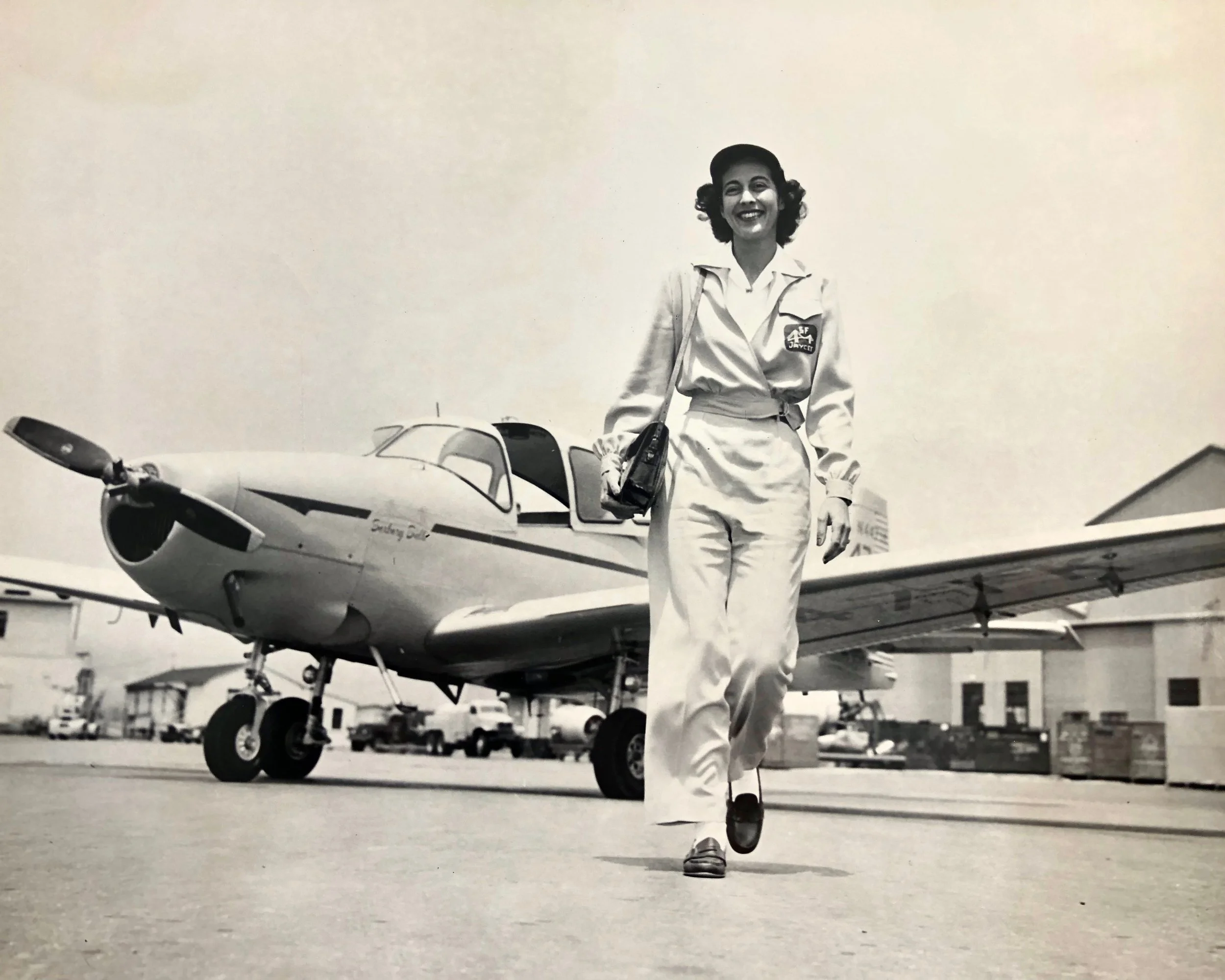
The mission of bettypfister.org is to honor the extraordinary life, contributions, and impact of Betty Haas Pfister—pioneering aviator, civic leader, and Aspen visionary—by advocating for the renaming of the Aspen Airport terminal as the Betty Haas Pfister Terminal at Sardy Field.
This initiative seeks to recognize a woman who shaped aviation history, advanced emergency air rescue, championed aviation infrastructure in the Roaring Fork Valley, and inspired generations of pilots—especially women—to pursue the skies without limitation. Through education, advocacy, and historical preservation, we aim to celebrate Betty Pfister’s enduring contributions to Aspen, aviation, and American aviation heritage.
Roaring Fork Valley Hero
After WWII, Betty continued flying. Although there were fewer piloting opportunities for women, she was lucky to find several unconventional jobs. For a time she transported cattle to South and Central America. Finally she landed a job as a stewardess with Pan American Airways, while also competing and winning air races all across the United States. She and her beloved “Galloping Gertie” a Bell P-39Q Airacobra, won the International Air Race in 1950 and in 1952. Today, “Gertie” is on exhibit at the Smithsonian National Air and Space Museum in Washington D.C.
Betty worked for Pan Am for several years. Toward the end of this stint, a fellow WASP, Ruth Humphries Brown, invited Betty to visit Aspen. While skiing on Ajax Mountain Betty spotted a handsome man in the lift line with a cardboard sign hanging around his neck that read, “If you think I’m handsome, I’m available” followed by his four-digit telephone number. Art Pfister and Betty Haas were married in 1954. Art was also a WWII Pilot. The two had much in common including their love of flying and skiing.
In 1950, Art bought the Lazy Chair Ranch on Buttermilk Mountain. Fritz Benedict designed their home where they brought up their three daughters and lived for the rest of their lives. Betty gave up her air racing career but continued to be active in aviation. She took up gliding, receiving her license in 1966. She flew both lighter-than-air and helium balloons and participated in the hydrogen balloon races in the Swiss Alps. She enjoyed the excitement and freedom of balloon flight “going wherever the wind blows you.”
If it went up in the air, Betty wanted to fly it!
National Treasure
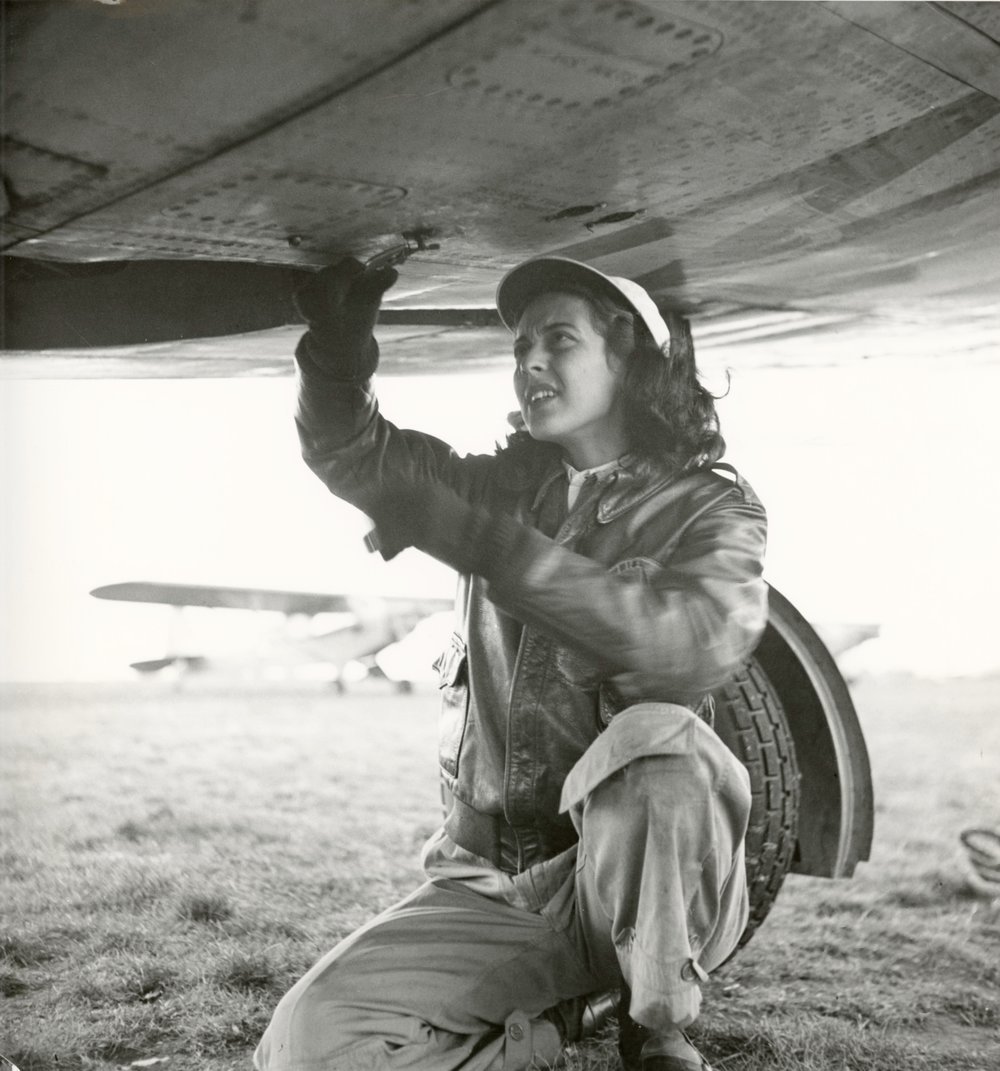
Betty was a WWII Women Airforce Service Pilot (WASP), Class 43-W-5. Betty was a member of the WASP’s from 1942-1944 when the war ended and the group was summarily disbanded.
Assigned to the ferry command, Betty shuttled many types of aircraft, including B-24s B-17s, from the wartime factories to the operational fields.
In 2010 Betty, along with her fellow WASPs, were belatedly awarded the Congressional Gold Medal for their service from President Obama.